Heavy mobility, reimagined.
India's first battery-swappable 55-tonne electric trucks, and the network being built so they never wait to refuel.
Read the story ↓Mumbai · Noida · Pune · Nhava Sheva
 Energy in Motion
EIM builds India's integrated electric freight ecosystem: heavy-duty electric tractors, automated battery swapping, charging infrastructure and green energy, sold as one service to fleet owners. An associate company of Ravindra Energy Limited.
A diesel truck's job, without the diesel.
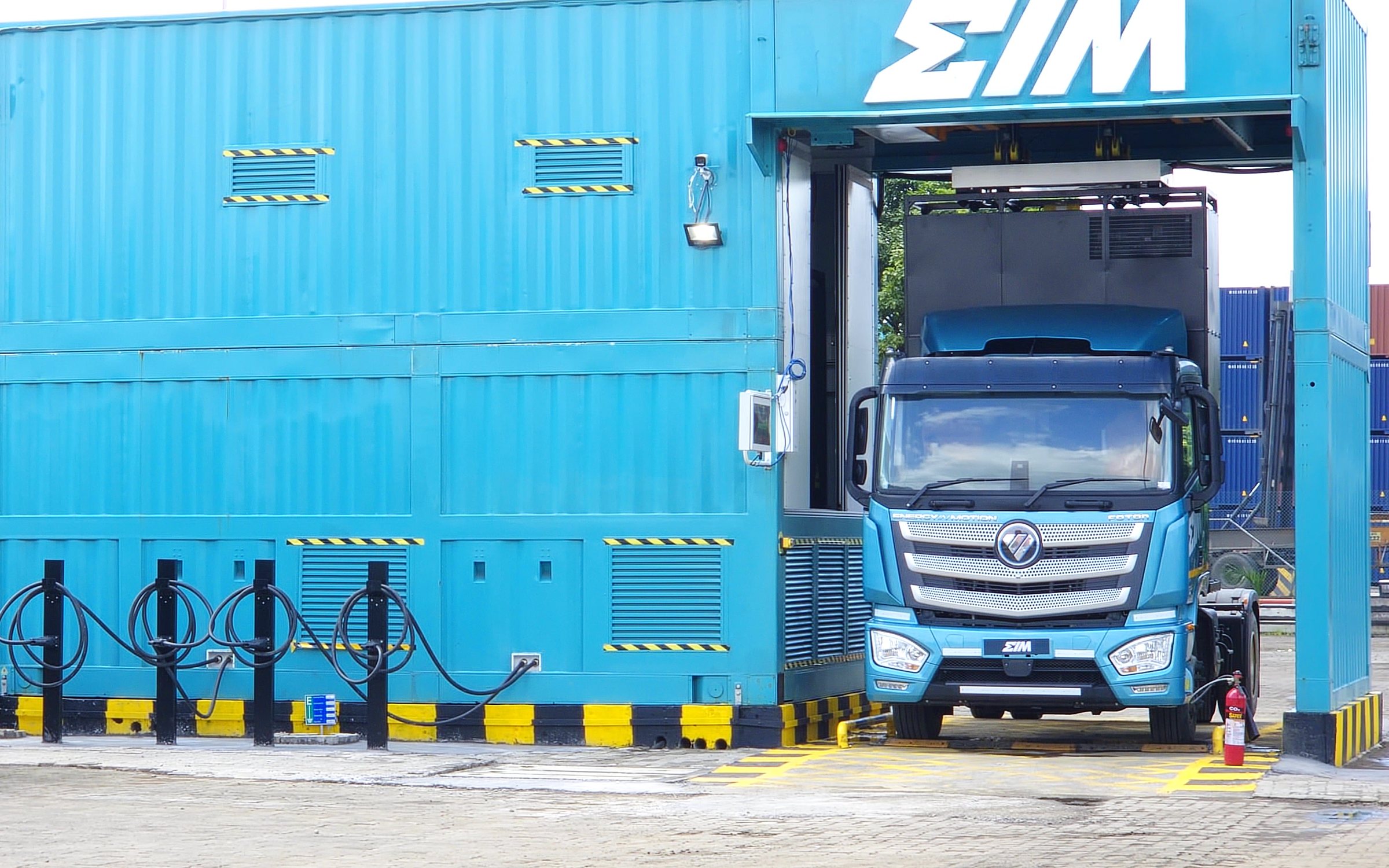
The EIM‑Foton ASHWA is a 55‑tonne electric tractor built for container haulage. The battery sits behind the cab in a swappable cassette, so the fleet owner buys the truck and subscribes to the energy. Homologated by ARAI in a record seven months.
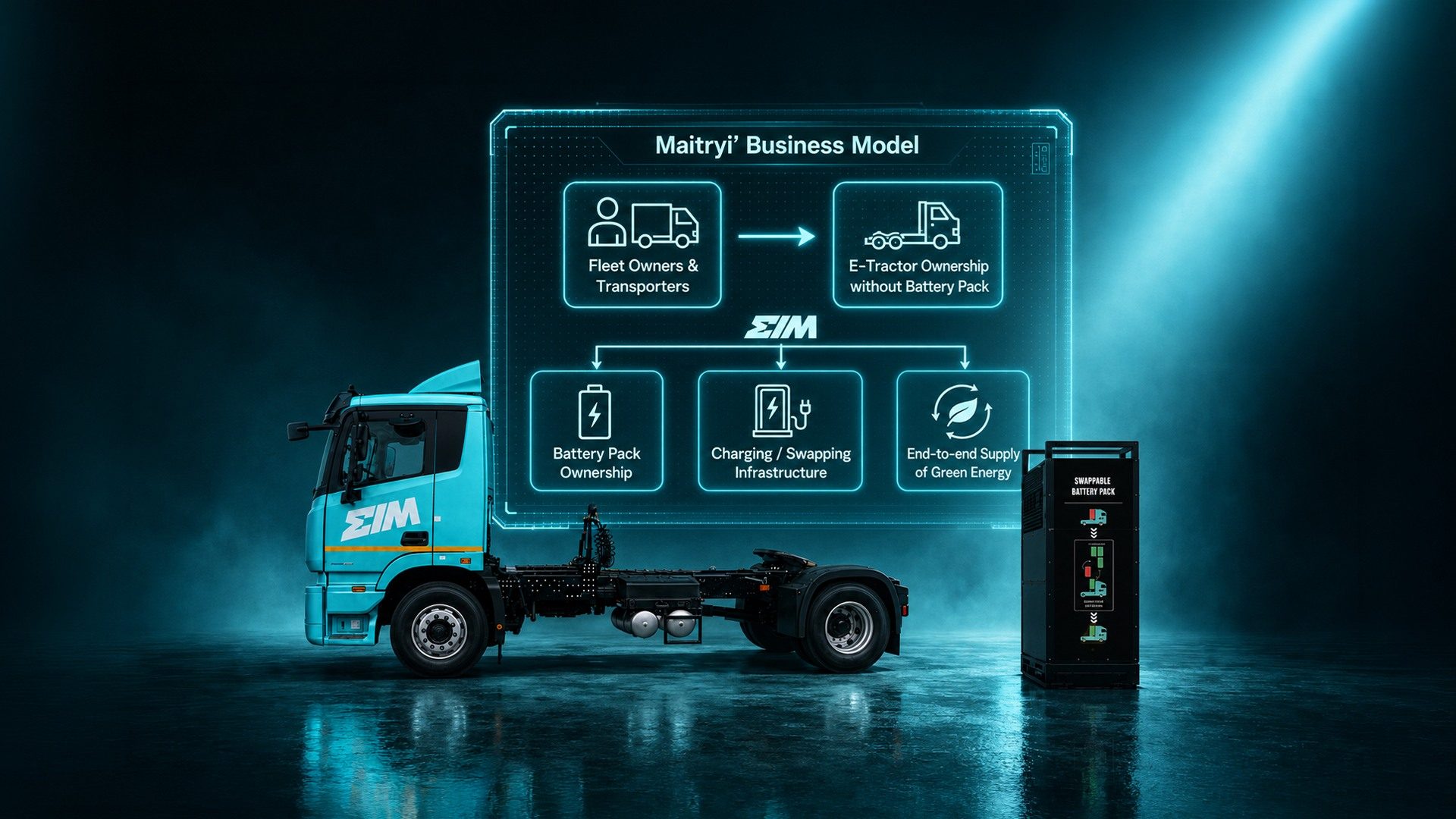
Electric trucks cost far more upfront than diesel; charging takes six times longer than a fuel stop; and a thin charging map makes every route a gamble. Maitryi answers all three at once: the fleet owner buys the tractor without the pack, EIM owns the batteries and the swap‑and‑charge network, and supplies the green energy end to end.
Two years from registration to a factory.
First EV fast charger inside JNPT
High-capacity charging for heavy-duty fleets, inaugurated by the JNPA Chairman.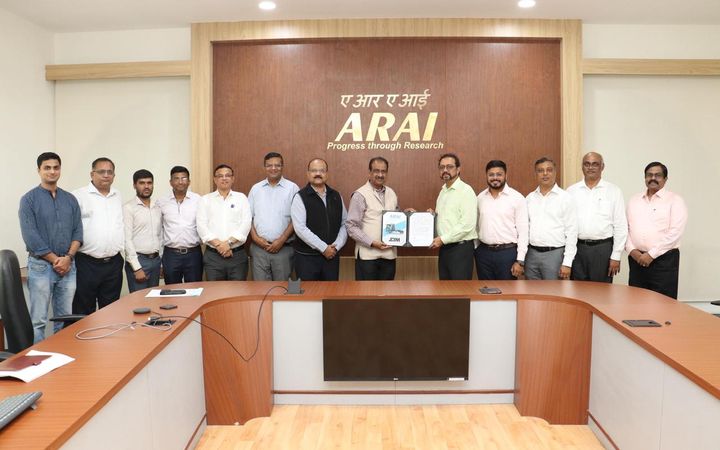
ARAI homologation in 7 months
CMVR certification for India’s first battery-swappable 55T e-tractor (282 kWh).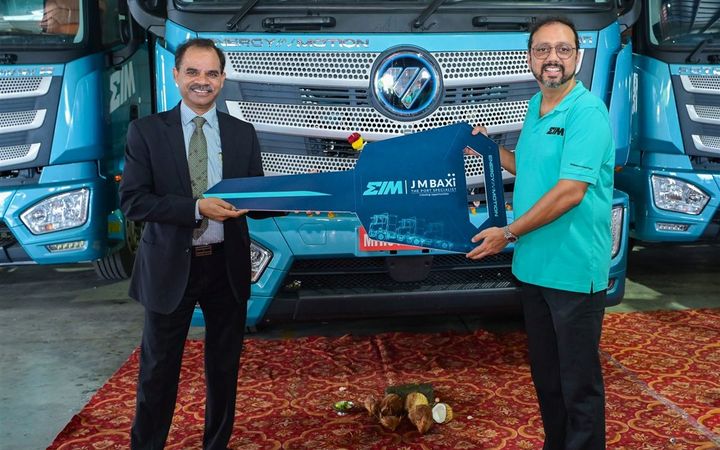
First commercial sale
Keys of the first EV truck handed to MICT, Mumbai. Commercial operations begin.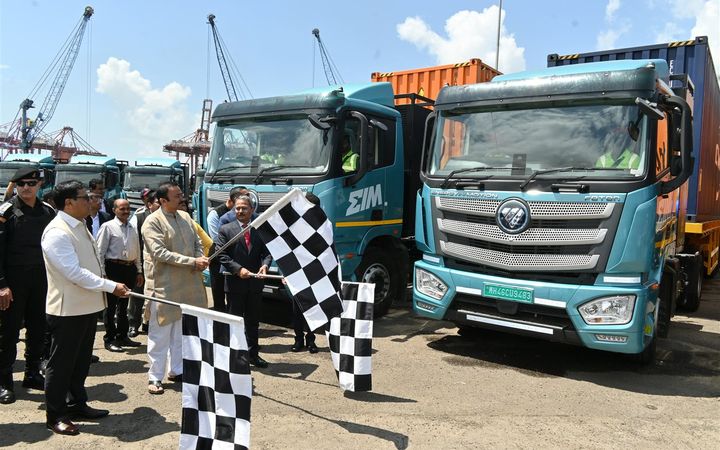
India’s first swappable EV truck fleet
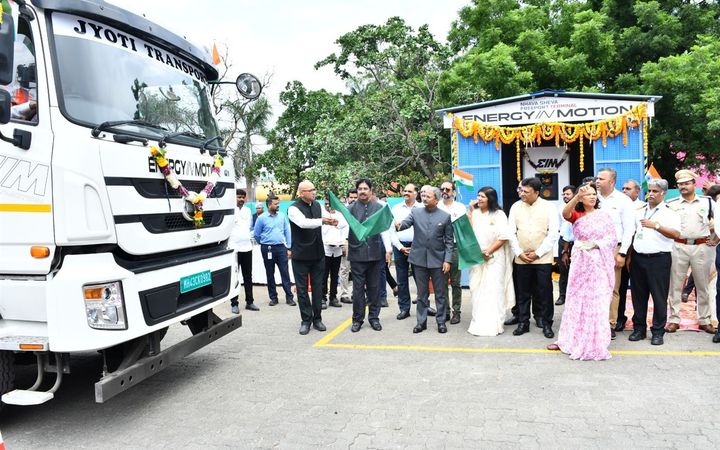
50 trucks flagged off at JNPA by Union Minister Sarbananda Sonowal.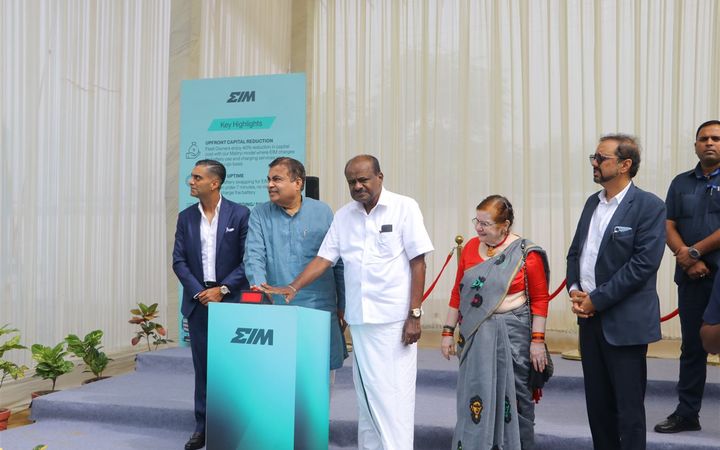
First public heavy-duty swap station
DICT, Sonipat. Inaugurated by Nitin Gadkari and H. D. Kumaraswamy.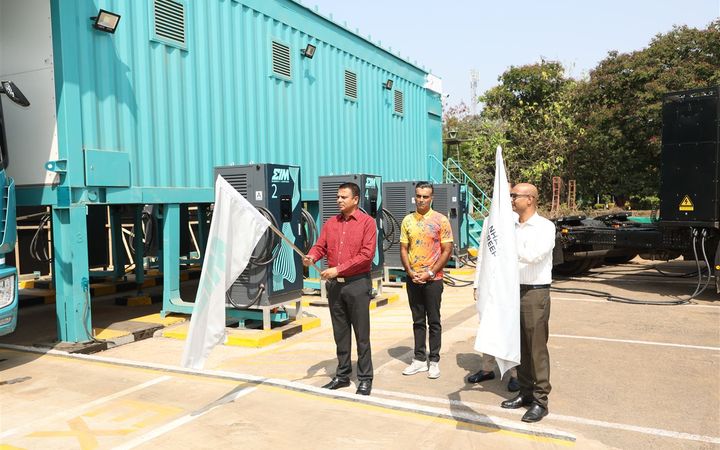
India’s largest swap & charge station
Opened at JNPT by the JNPA Chairperson, Gaurav Dayal, IAS.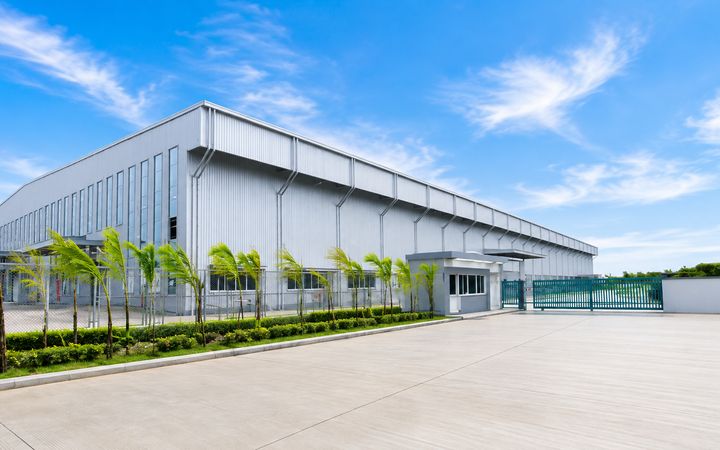
Vehicle assembly plant, Talegaon
EIM’s own plant near Pune, opposite Talegaon MIDC Phase 5.Seven milestones in twenty‑two months, from the first charger inside JNPT to EIM’s own assembly plant. The company itself was registered in March 2024.
Drive in. Don't plug in.
The truck rolls into the bay and stops on the marks. The station reads the truck's identity, checks the pack behind the cab, and unlocks it. The driver stays in the seat.
A gantry, not a cable.
An overhead crane lowers onto the depleted pack, locks in, and lifts a battery of more than two tonnes clear of the chassis. No forklifts, no hands on the pack.
The empty one goes on charge.
The pack slides into a charging slot in the rack and starts charging the moment it lands. That is the trick: the slow part of electric trucking happens off the truck, while the truck is somewhere else earning.
A full one comes down.
The crane picks a charged pack from the rack, carries it back over the truck, lowers it into the mount and locks it. The truck reports the new pack, the tally updates, the bay clears.
Back on the road in under eight minutes.
About the time a diesel takes at the pump, against hours at a plug. The station keeps charging the pack that came off, ready for the next truck. That is why EIM's plan is measured in stations, not chargers.
 0Swap stations
 0Chargers
 0Upcoming
 0Planned
It started at the port.
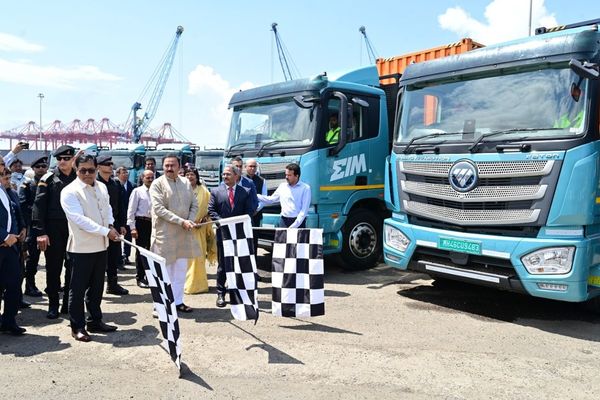
Jawaharlal Nehru Port moves the most containers in India, on short, repetitive, heavy trips: exactly the duty cycle a swappable truck wins. EIM's first swap station was commissioned at the port's Nhava Sheva Distribution Terminal, and India's first swappable EV truck fleet, fifty trucks, was flagged off there in September 2025.
Two weeks later, the North.
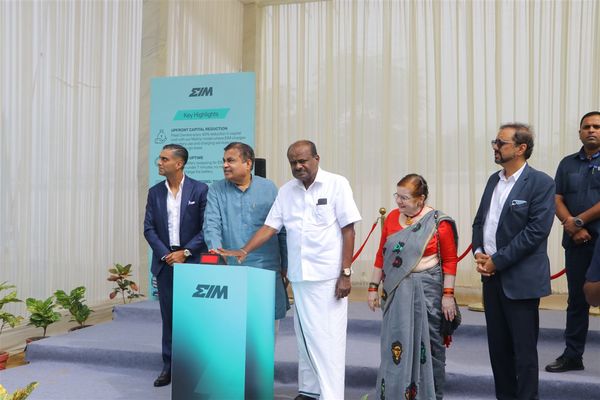
Station two was 1,400 km away. On 8 October 2025 the country's first public heavy‑duty swap‑cum‑charge station opened at Delhi International Cargo Terminal in Sonipat, serving the container trucks running between the inland terminal and the NCR.
A second bay at the port, and a corridor.
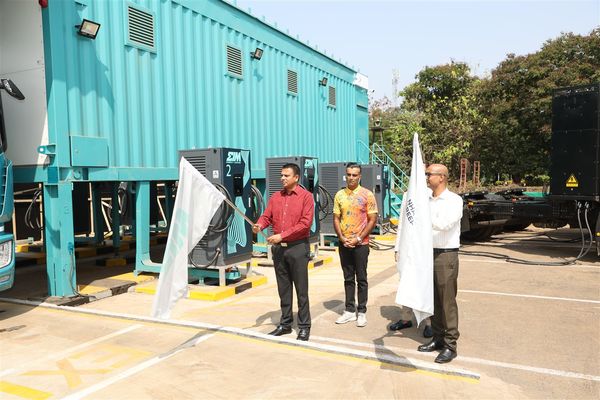
In May 2026 JNPT's second station, E5, opened as India's largest battery swapping and charging station, and the North turned into a corridor: Patli, Palwal, Rewari and Kotputli came online along the Delhi–Jaipur road within a week of each other. Seven swap stations, two zones.
Where they can't swap yet, they charge.
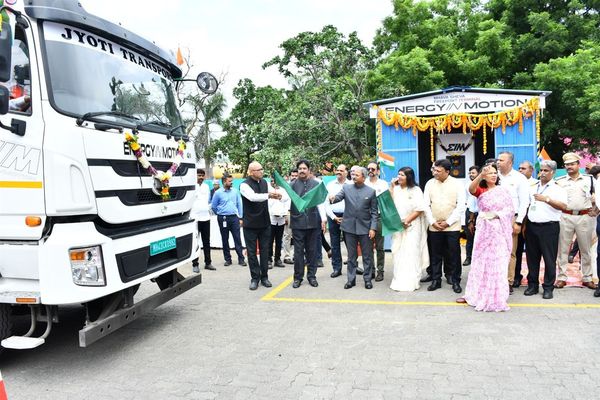
Alongside the seven swap stations, EIM runs eighteen DC fast chargers at ten sites in four states: Mehsana, Amirgadh and Kandla in Gujarat; JNPT and both MICT terminals in Mumbai; Thiruvarur and Tuticorin in Tamil Nadu; and JSW's Shiva Cement and Lapanga plants in Odisha.
Seven live. Seventeen on the way.
The next seventeen sites turn two clusters into corridors. Twelve in the West, from a third bay at JNPT up the Gujarat coast; three more in the North toward Jaipur; and a new South zone with two stations between Chennai and Thanjavur.
Join the ports to the hinterland.
Thirteen planned sites in the West and eight in the North stitch the two existing clusters into one Mumbai–Gujarat–Delhi spine, the same corridor India's container traffic already runs on. A truck that swaps at JNPT can keep swapping all the way to the NCR.
A fourth zone in the East.
Ten planned stations open an East zone across Odisha and Jharkhand, where steel, minerals and the eastern ports generate the heaviest, most predictable truck traffic in the country. Same swappable truck, same eight‑minute stop.
Fifty‑five sites. Four zones.
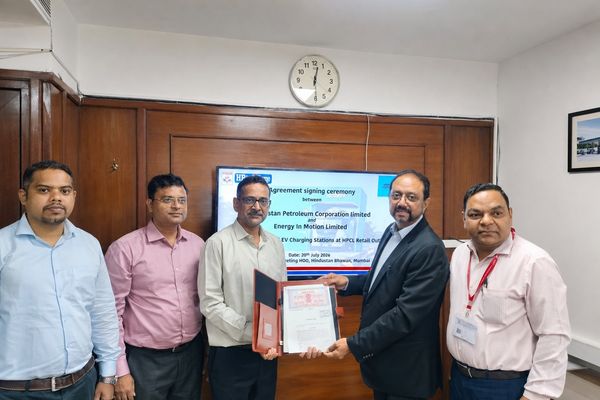
Seven swap stations and eighteen fast chargers live today; seventeen upcoming and thirty‑one planned swap sites; and a partnership with HPCL to put swapping and charging at fuel retail outlets across India. Live sites are at their real coordinates; upcoming and planned positions are indicative and their zone counts follow EIM's network plan.
A truck that never waits to refuel.
Running container, port, cement or mineral haulage on a fixed corridor? That is where swapping pays back first. Tell us the route and the daily kilometres, and we will come back with the stations, the trucks and the per‑kilometre number.